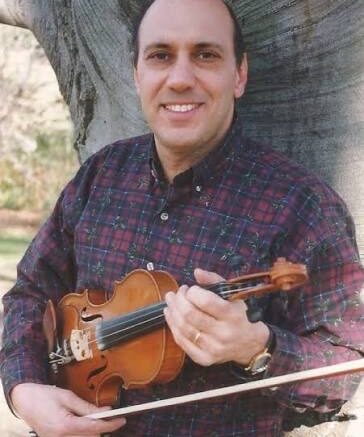
By Michael Laster
This is a tribute to my late father, Marty Laster.
In addition to being a brilliant musician, he also had a gift for writing, which he chose to utilize in his unpublished memoir from 2005, written approximately 11 years before his passing in 2016. Instead of making the documentary about my relationship and memories with my father, I wanted to approach this project as an attempt to tell his fascinating life story through his own words. It’s a story of creative flourishing, followed by personal tragedy, and picking up the pieces through the reinvention of one’s sense of meaning. But more importantly, it’s a celebration of his music, and a chance for me to showcase his genius as a violinist and as a composer. I hope this tribute inspires others who might find identity with his struggles, and I know it will inspire joy in anyone who is a lover of great music, regardless of style.
“Being from an insulated part of the South Bronx, I never thought of myself as a New York City resident. I was from The Bronx, period. We thought of Manhattan as “the city”, a place where wealthy, more educated people lived and worked. I grew up in the 1950s with my older brother Alan and parents in a two-level, brick house that was part of a row of connected homes on a short street called Harrod Ave. Our neighborhood was a mix of Jewish, Italian and Irish immigrants, not unlike the Lower East Side of Manhattan at that time. My father was American-born, and my mother escaped Nazi Germany just before the holocaust. We were Jews who belonged to an Orthodox temple, but went to Chinese restaurants to have pork and shrimp. This was the conventional practice of Jews in the area.
My father sold tokens for the transit authority at various train stops. Once a year, he would whip out his violin and play his medley of tunes with a joy that I otherwise never saw on his face. Playing snippets of “Stardust” into “Humoresque” and ‘’My Yiddische Mama”, he would end his “set” with a few measures of “Turkey in the Straw”. Whether that last excerpt planted a seed in me to play bluegrass fiddle 20 years later is food for thought. In my mind’s ear, I can hear his beautiful tone and perfect intonation, despite the lack of any practice during the year. Showing me a newspaper clipping where he, as a child, accompanied the then-famous cantor, Josef Rosenblatt, in Carnegie Hall seemed totally out of character with the blue-collar token clerk that he had become. I later learned that my grandmother ran off with the house boarder without a goodbye. This may have sent him over the edge, but I suspect there were problems brewing long before.
We would worship Jascha Heifetz together, but my Dad’s perfectionism reared its ugly head with the implication that if you can’t play on the level of Heifetz, Menuhin or Oistrakh, you might as well pack it in. I began playing violin at the age of 10, late by conservatory standards, and played in the school orchestra at PS 77. It had a phenomenal music program where the older kids – the seniors – would coach the juniors. We performed at Gracie Mansion and City College, and I became concertmaster in the 6th grade.
My Uncle Herman, who was my grandfather’s brother, was a somewhat mysterious, eccentric man who owned a deli around the corner from Carnegie Hall. Before attending a violin recital, it was tradition to visit him and have a juicy pastrami sandwich in the back of the store. He was friendly with the great violinist, David Oistrakh, who would stop by for a bite, or to exchange greetings before his recitals. Uncle Herman mentioned my violin beginnings to the master. Oistrakh gave him a postcard to give to me. It had a picture of himself on one side, and on the blank side, he wished me luck with my violin studies – and signed it. Encouragement like that to a Bronx boy like me may have had more significance than I ever thought. Over the years, the card got misplaced. I still, on occasion, go through my old boxes of memorabilia, hoping to rekindle that memory and frame the card. To this day, David Oistrakh, in my mind, was a giant among violinists.
My experience at High School of Music & Art had lasting effects. It opened me up to the world outside the Bronx, one of sophistication and a political sensibility. Around that time, I made and wore beads, though my hair was still short. You may say I was a “hippy” in its amphibious stage. My eclectic musical roots were formed during the folk music boom of the early ‘60s. I played guitar, and worked out Peter, Paul and Mary arrangements with my brother in addition to the music of Phil Oaks, Bob Dylan, Joan Baez, Pete Seeger, etc. I developed skill at finger-picking, and this led to many a campfire sing-alongs. My exposure to the bluegrass banjo at Washington Square Park in the mid ‘60s mesmerized me and also planted a deep seed. On Sundays in that park, every few steps would bring you to another group of folk musicians, ranging from blues to Dylan-type singer-songwriters to bluegrass musicians.
I moved from violin to viola at Queens College. Soon came my hippy period. Wearing beads, long hair and a scraggly beard, I began to jam, playing Grateful Dead and other ‘60s music. This led to my first band, Lighthorse Harry, that played a combination of folk styles, 60’s rock, and the quirky swing style of Dan Hicks.
Contrary to these events, I was a serious student of music in college, and embraced the classical world of composing, analysis and form. My later improvisational style was influenced by these elements, though I struggled not to let the cerebral nature of my classical training render my playing sterile and lacking in spontaneous energy. Over time, a reasonable balance was achieved.
Baroque counterpoint – that is, having totally different melodies simultaneously conversing with one another – excited and fascinated me in the same way that I loved solving algebraic equations in Junior High School. According to my brother, as a young, withdrawn child, I had the ability to add and multiply complex numbers in my head. I was a kind of idiot-savant (now called savant syndrome), and my mind, devoid of emotional content was, in essence, a computer. Later, when I joined the human race, I lost that ability, but still loved and excelled at math.
There is something that ties math to the intricacies and logic of Bach’s counterpoint. That represented the intellectual side of Bach. It was much later that I began to comprehend the spiritual and emotional depth of most of his music, including the counterpoint. I developed the skill of writing a fugue at Queens College, an ability that, like driving, never totally leaves you. Bach’s music, however, appeals on so many levels. There is an improvisational, even jazzy element to his writing. As complex as the counterpoint gets, a rhythmic groove and drive prevail, even in his slower compositions. With his spontaneous style, the music resembles bebop jazz, minus the swing rhythm.
The ideas flowed out of Mozart as well, with elegance. There is an architecture and a feeling of inevitability in Mozart’s writing that is the hallmark of what we call “genius”. I like the phrase “sound sculpture” in describing his interplay of music and silence. I have experienced moments as well – of being a channel of ideas flowing through me, as if from a higher source. The content, however, doesn’t quite match the consistent warmth, beauty and power that flows out of Leopold Amadeus.
Now Beethoven was a different animal entirely. He agonized over the details of his compositions, and was a genius of form and the development of ideas. Often the music initially projects an air of suffering and conflict, but ends on a note of triumphant optimism. Beethoven communicated emotions and aspects of the human condition with great intensity and directness. In my darkest hours, I turn to Beethoven for strength, courage and optimism. I formed relationships with certain compositions and felt they were speaking to me directly. Great art creates a world that sweeps you away, takes you on a journey, and then drops you out at the other end as an altered person – and for the better.
Brahms was a composer who captivated me with the lushness of his strings and the weaving out of melodies ranging in scope from lyrical to majestic. In addition, Brahms played with rhythms in a way that can leave one disoriented, as time meters are ignored. Let’s call it musical vertigo. The romantic composers were the masters of heart-throbbing melodies and orchestration; that is, the art of blending instruments into a kaleidoscope of tonal colors. In particular, Tchaikovsky was a master of these techniques.
During those Queens College years, I accompanied a soul/gospel group, the “Village Soul Choir.” That first-hand experience with blues and gospel music, in addition to playing in an interracial group, was invaluable. Following this experience was Wicker’s Creek, my and Bela Fleck’s first bluegrass group. Watching Bela grow into the banjo at age 16 and become an international star has been a thrill. I was lucky to pluck him out of his busy schedule to play on my CD, “Sound ics”. I next played in the Western Swing band, Harmony Grits. I was still a bit withdrawn then, and it was ironic, being introduced as Mad-Dog Marty Laster. I also played cowboy music with “Dobro Dick”, a self-proclaimed hobo who grew up in a middle-class family on Long Island, but lived his life riding freight trains and working on ranches in Montana. He had a demonic style of dobro playing that I still marvel at when listening to my ancient tapes.
In the mid ’70s, I was in New Orleans, and my friend Pat Flory and I were booked to play at a bluegrass concert on a very local radio station in Walker, Louisiana. Now, Walker is about as far south as you could go in bayou country. I was feeling a bit apprehensive and wasn’t prepared for the scene that was to follow. As we entered the venue, there was an assortment of confederate flags and Ku Klux Klan recruitment posters hanging down saying “We Need Good Men and Women”. It then dawned on me that this was the Klan headquarters of the south that was untouched by the civil rights movement of the ’60s. There was a bluegrass band on stage, all chewing tobacco and with enormous beer guts. As they stared us down I couldn’t help thinking that being a northerner and Jewish were two big strikes against me.
Finally when it was our turn to perform, one of the main honchos came up to me and said, “the good ol’ boys wanna hear a fiddle tune.” I immediately ripped into “Ragtime Annie”, and I mean immediately, and did a pretty good job. When I finished, the same guy came up, pointed his finger a few inches from my face, and said emphatically – “Boy! You were bawn with a fiddle in yo’ hand”. They kept us on stage an extra twenty minutes, and we escaped unharmed.
Next in line was a Latin fusion group called Ell’s Kitchen (?). It was a large ensemble with horns, saxes, rhythm section and violin with great arrangements.
My connection to each ensemble that I am listing lasted at least a year, and I immersed myself in each style, studying the violin masters, the Heifetzes of each style.
In the group,“Rhythm and Romance”, we played strictly swing jazz. Next I pursued my Jewish roots while playing in the Klezmer band, Kepelya.
I next played with a bluegrass band, “Yellin’ Grass” with Bob Yellin from “the Greenbriar Boys”. After gigging with various bands for several decades, I ended up in the orchestra pit of several Broadway musicals, including Big River, The Lion King, Footloose, and The Best Little Whorehouse in Texas.
However, with my bohemian sensibility, I felt not unlike the whores of the show. I was selling my talent for a decent income and a position of legitimacy as a professional. Artistic satisfaction was not in the contract, and neither was fun. To fully recharge my batteries, I would shed my tuxedo and squeeze in opportunities to play improvisational music of my folk, bluegrass and swing roots. In retrospect, I enjoyed – on different levels – any opportunity to play good music with good players of any instrument, and had novel experiences in all the work I did.
Here are my stories of the life-saving potential of music:
I was casually strolling while playing violin at a street fair in Great Neck, N.Y. – dressed in a makeshift Renaissance outfit, and looking fairly ridiculous. It was towards the end of the day, and I was bored and tired. I believe I was in the middle of the Italian song Funiculi, Funicula when I heard a car screech to a halt. An argument ensued after one car had cut off the other, and suddenly, one of the drivers, who had a crazed, drug -induced look got out of his car, opened the trunk and began to unzip what I’m sure was a rifle bag. Looking about as threatening as Barney the dinosaur, I took advantage of the situation and yelled out to the “gunman” with a nervous smile “Put it down – it isn’t worth it! ” He looked at me in a confused manner, cursed under his breath, slammed the trunk and sped off like a madman.
I was in the right place at the right time. I believe that experience may have contained vestiges of the “street smarts” carried over from my boyhood days in the Bronx. Another example is the time that a couple of hoods had just mugged someone in front of me and were on a roll. I was carrying my violin and dressed in a tux. They said, “Hey, why don’t you handover that violin.” My heart was racing but I looked them in the eye and said sincerely, “Look man, I look like I got money, but this violin is all I have. Give me a break.” They uttered some curses to save face and left me alone. Usually, but not always, honest, direct communication works.
Another memorable experience, this time of the non-solo kind, was a mandolin-playing stint at Carnegie Hall. I was a good, not great, mandolin player, but was well-connected enough to land this gig. This was a reenactment of a Carnegie performance of the ‘20s by the “Clef Club Orchestra”, an all- black ensemble that played pre-swing music, highly influenced by ragtime. We were mostly white this time around. We played the actual music charts of the original ensemble, though we’ll never know how much we captured the spirit of the original Clef Club, if at all. No words can describe the feeling of being on the stage of Carnegie Hall, where the greatest musical artists on the globe have performed. Unbeknownst to him, I can say that I shared that stage with Jascha Heifetz.
Finally, I played with a folk ensemble that put it all together, the “Silk City Quartet” with mandolinist Barry Mitterhof. That group played several of my compositions that fused classical and folk elements.
My life was inseparable from the violin, and that was my identity. In my spare moments, I was involved with my family. Jackie and I were married in ’84, and our son, Michael was born in 1990. Following a bout with colon cancer, I then recorded a CD of my music. This was the equivalent of running a musical marathon. I didn’t know at the time that my cancer was going into remission and threw in the kitchen sink, stylistically. I learned that New York City provides a musical palette that cannot be found elsewhere. I needed an Australian-style didgeridoo player, a jazz oboist, an Andean style wooden flute player, a Gypsy cimbalom musician, and an expert pedal-steel guitarist. They are all here, just a phone call away!
A year later marked the beginning of the end of the major chapter of my life that I embraced for over 30 years, and all in a few clicks of a metronome.
I was recording with the “Hot Club of Cowtown,” an excellent young western swing band, about 1999. I wasn’t playing up to par, and my coordination was a bit off. It was upsetting, but I tried to tell myself– we all have bad days. I then had traction treatments on my neck for some cervical problems, and in the middle of this, I noticed a very slight, intermittent tremor in my right arm. I assumed it was from the traction, and stopped the treatments. The tremors continued, and I went to a neurologist. He said, lacking in bedside manner, “It’s Parkinsonism”. In shock and disbelief, I went for a second opinion. This time I was told it was Parkinson’s disease. The diagnosis is made in the following way: You hold out your hand, and it shakes. Next, you complain of stiffness in your arm and, poof, it’s a Parkinson’s diagnosis.
I continued to work, while creatively finding ways to hide the tremor. It is what is called a “rest tremor”, and when the arm is in motion, it stops. So I was able to still play, just not as well. The stiffness keeps me from playing repeated notes quickly and I get around that by slurring several notes to a bow.
I’m glad I didn’t quit playing before my gig at the Russian Tea Room. It was a birthday party for Hillary Clinton. When the president finally arrived, the room lit up. Whatever your feelings about this man are, he has charisma. He also loves music. He entered the room, and headed straight for the bandstand and shook all our hands. And yes, I have a photo of him standing in front of me with the band!
Most people didn’t notice my problem. The reality is that I was still playing well, but was tortured by the slightest downturn in my playing. I have come to realize that I carry the same perfectionism that immobilized my father.
The identity crisis I suffered at a point when I was riding high in my career was real, but compounded by other issues. I had used music in part to avoid verbal contact, and my emotional life was tied up in notes. I had also been doing pretty well financially for a freelance musician, and the loss of income hurt our lifestyle and my confidence.
For about three years, I walked around in a dark cloud, as my identity and confidence was disintegrating. I wasn’t simply a violinist. It was my first love. I was driven to improve my skills, which were standing still, but then began to take a downturn. I also lost my membership to a community of freelancers. No, it was several communities, due to all the styles I immersed myself in. It seemed like a cosmic joke was being played: that I was dealt this hand at the height of my creative powers, and at a relatively young age.
A neighbor who has a business in liquidating people’s estates offered me an old violin that was found in an abandoned apartment. “Sure”, I said, fixing up instruments and selling them cheaply to new students is a hobby of mine. As it turned out, the violin wasn’t worth repairing, and was actually ideal kindling for a campfire.
Before dumping the instrument, I had a thought. I had been exploring “assemblage”, a form of sculpture, using wood, glue and nails. Creating something with the violin would be a challenge, but this proved to be much more. It was the start of a painful, but life-affirming metamorphosis. I thought initially that I would chop up the instrument into the form of a big jigsaw puzzle; a fun project, a piece of cake. I began to dissect the instrument, and it set off a series of painful reactions in me. After countless times of “making love to the violin”, metaphorically speaking, I was now mutilating it. I then realized this was actually an act of rage. I felt betrayed by the instrument that was no longer responsive to my loving touch. I continued the painful process, as the broken violin was beginning to take on the symbol of a broken career and technique. I looked at the half violin that I destroyed, and wanted it fixed. I was wishing my life to be unified and whole once more. I then decided to leave the other half of the violin unbroken as a new, more positive symbol: one in which a new view of myself could emerge.
Survival, I now realized, depended on getting in touch with my spirit – which expressed itself through music. That same spirit could be taught to channel itself through other modes of expression, I told myself. I was beginning to feel the possibility of emerging from my self-imposed cocoon, freed from the symbiotic relationship to the violin, and music in general. The sculpture began to take on the appearance of a fragmented violin that morphed itself into a symbolically fixed, whole and reborn instrument. After going through several titles, I arrived at “Rebirth”. I surprised myself that, in a medium in which I was a beginner, when one has an urgency to express oneself, the message gets through somehow, despite the rough edges.
After completing the “sculpture,” I felt both drained and liberated, as a thick cloud was beginning to lift, with a new optimism replacing it. I also felt a bit more at peace with the “medical hand” that was dealt to me.
The diagnosis of Multiple Sclerosis was made fairly recently. I first awoke with some tingling and numbness in my left hand and arm. Two days later, the numbness spread up into my neck and scalp, and I couldn’t bend my head. I couldn’t hold a cup for more than 3 seconds, and had no idea how soft or hard I was pressing on an object. I would awake at night, feeling something crawling on my chest. It was my hand. Most of these debilitating symptoms eventually subsided, leaving me with an annoying surface numbness in the left hand. The good news—I can play again—at least well enough to demonstrate for students.
As far as my violin playing goes, I can still play when not stressed. The slightest bit of anxiety can, however, reduce me to a beginner or worse, as my arm tremors out of control. Yes, the tremor has progressed and is visible much of the time, but still subsides when the arm is in motion. What I have discovered is that when I lose my former sweet tone, I can still play some great blues. A raunchy sound is fully compatible with the blues as an expression of angst or anger!
Seeing the glass half-full is a useful goal for living a more positive life, but it’s not that simple. In my opinion, the roller coaster ride is a more realistic metaphor of the human condition for most of us. Yes, it’s better if the track is heading steadily upwards, but you can’t avoid the downturns. The key is in the cliché that has passed the test of time of thousands of years of Buddhist practice: “going with the flow.”
I love the title and first cut from my friend Ray Chesna’s CD. It is entitled – “Every Day above ground is a Good One.” No promises, but I hope to embrace that philosophy ‘til the end.
I’ll leave you with another quote. This is from the neighbor who gave me the “Rebirth” violin. I asked him in the elevator, casually – “How are you doing?” His reply was, “You know, I thought I may live forever… Well, so far, so good!” It’s handy and comforting to have a Zen master living in your apartment building!
Passing the torch and trying to touch individuals in a positive way is my immediate goal. In teaching children music, you have an opportunity to integrate the instrumental skills at hand with life’s other lessons. And through writing, therapeutic unto itself, I hope to bring some entertainment, pleasure and – perhaps, meaning – into people’s lives, even if limited to a handful of kindred spirits. The journey is not over as long as rebirth is possible with each challenge thrown my way.”